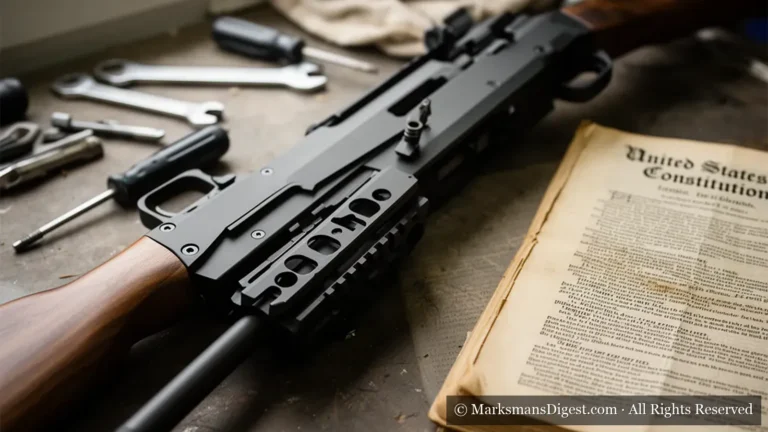

The contemporary debate surrounding the Second Amendment frequently narrows its focus to either historical ratification eras or immediate present-day concerns, often overlooking the profound implications for future generations and potential long-term societal challenges. Understanding the full scope of the Second Amendment requires acknowledging its role not only in the past and present but also as a safeguard against unforeseen future threats, both domestic and foreign.
The Historical Imperative: Bruen and Ratification
To truly grasp the foundational arguments for firearm ownership in the United States, one must look to the late 18th century, specifically the periods of the Second and Fourteenth Amendments’ ratification. The Supreme Court’s landmark decision in New York State Rifle & Pistol Association, Inc. v. Bruen (2022) underscored the critical importance of historical context, mandating that modern firearm regulations be consistent with the nation’s historical tradition of firearm regulation. This judicial doctrine compels us to consider the perspectives of those who drafted and ratified these pivotal constitutional amendments, offering insight into what they considered “just infringements” on the right to keep and bear arms.
A constitutionalist interpretation often posits that the right to bear arms is a fundamental liberty, preceding government statute. For those who hold this view, the historical record of the Founding Fathers’ intent solidifies the notion of an armed populace as a check against potential governmental overreach. This perspective often clashes with modern arguments that emphasize evolving societal needs over historical precedent, viewing the Second Amendment as a relic unsuited for the complexities of the 21st century. Indeed, the ongoing discussion around constitutional interpretation is a frequent topic at gatherings like the Gun Rights Policy Conference, highlighting its persistent relevance.
Modern Perspectives and the “Antiquated” Argument
Many contemporary gun control advocates assert that the Second Amendment is an antiquated provision, born in an era of muzzle-loading firearms and militias, and therefore irrelevant to the challenges of today’s society. They argue that the “present day needs” for public safety necessitate restrictions on firearm ownership, including bans on certain models and the imposition of significant burdens on obtaining others. This viewpoint often dismisses the idea that an armed citizenry serves as a deterrent against tyranny, suggesting that individual firearms would be ineffective against a modern military.
This dismissal stems from two primary assumptions: first, a difficulty in conceiving how civilians with commonly available firearms could stand against advanced military hardware; and second, an inability to imagine the United States government ever becoming tyrannical. While proponents of strict gun control may participate in movements critical of governmental power, they often maintain that the threat of domestic tyranny is negligible, prioritizing immediate public safety concerns based on their perception of current events.
Beyond the Immediate: Future Threats and National Resilience
The debate over firearm ownership, however, extends far beyond the immediate concerns of crime or even domestic political shifts. It encompasses long-term “what if” scenarios that challenge the assumption of perpetual national stability. While some possibilities may appear alarmist, a thoughtful examination of history reveals that no nation, however powerful, is immune to decline or external threats.
Consider the fates of once-dominant empires: Rome, with its vast dominion; the Mongol Empire, stretching across continents; or the long-lived Ottoman Empire. Each eventually receded, leaving behind a vastly different geopolitical landscape. To assume the United States will remain indefinitely at the pinnacle of global power is to disregard this historical pattern. The U.S. currently possesses immense resources and military strength, factors that contributed to its superpower status after events like World War II. Yet, these very advantages could make it an attractive target for future powers with differing ethical frameworks regarding territorial acquisition.
For those focused on the long-term strategic implications of an armed populace, the Second Amendment is an “insurance policy” not just against domestic overreach, but against a future where the nation might face existential threats. Discussions surrounding the capabilities of various firearms, such as those that arise during a Senate panel weighing suppressor reclassification, highlight the ongoing relevance of civilian access to effective tools for self-defense and national resilience.
The Citizenry as a Deterrent: A Long View
If prevailing gun control agendas were to disarm the populace, future generations might find themselves vulnerable should the nation’s military capabilities wane or if a foreign power decides to invade. In such a grim future, a civilian population stripped of its means of defense would be largely helpless against a determined aggressor. Conversely, a citizenry that retains its constitutional right to bear arms would present an insurmountable challenge to any invading force.
The sentiment, often attributed to Admiral Isoroku Yamamoto — that invading America would be futile “because there will be a rifle behind every blade of grass” — encapsulates this strategic deterrence. While historical evidence for this specific quote is lacking, the underlying principle holds significant weight for many who advocate for robust Second Amendment protections. It speaks to the formidable resistance an armed populace could mount, turning every town and every parcel of land into a contested zone, making occupation prohibitively costly in terms of both resources and lives.
“Protecting the Second Amendment here and now is important because we trust our gun rights to be there, so we can protect our families from the dangers of today. Yet it’s not just about that. It’s about making sure generations untold have the means to protect themselves from the dangers of that day as well.” — Bearing Arms
Ultimately, the debate over the Second Amendment is not merely about the present day’s crime statistics or the historical context of its ratification. It is also a forward-looking discussion about national resilience and the ability of ordinary citizens to defend themselves, their families, and their communities against threats that may emerge decades or centuries from now. Maintaining the right to keep and bear arms is viewed by many as an essential safeguard for the enduring liberty and security of the nation, providing a bulwark against potential future adversities.
Frequently Asked Questions
Why is the Bruen decision relevant to the gun debate?
The Bruen decision requires gun regulations to align with the nation’s historical tradition of firearm regulation, emphasizing the original intent behind the Second and Fourteenth Amendments.
What is the “antiquated” argument against the Second Amendment?
This argument posits that the Second Amendment is a relic from an earlier era of simpler firearms and militias, making it irrelevant to modern societal needs and challenges.
How do gun rights advocates view the Second Amendment as an “insurance policy”?
They view it as a safeguard, not only against potential government overreach domestically but also against future foreign aggression or societal collapse, ensuring citizens can defend themselves.
Can an armed citizenry truly deter a modern military?
While direct confrontation with a state-of-the-art military is unlikely, an armed populace can create a significant deterrent effect, making any occupation or subjugation prohibitively costly and difficult for an aggressor.
Why consider future threats in the gun rights discussion?
Considering future threats, both domestic and foreign, acknowledges that national stability is not guaranteed and that an armed citizenry contributes to long-term national resilience and defense.
What historical examples are used to illustrate the potential for national decline?
Historical examples like the Roman, Mongol, and Ottoman Empires are cited to demonstrate that even powerful nations can eventually decline, highlighting the importance of long-term preparedness.